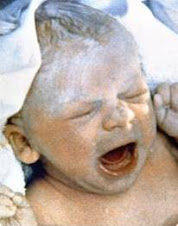
- Malin Stenberg was
only 15 when told she had been born without a womb
- Her friend donated one
as part of programme at Gothenburg University
- She has now spoken about the magic of being a mother to her son Vincent
Monday, June 13, 2016
World's First Delivery After Successful Womb Transplant: Mother tells of her 'Total Happiness' After Son's Birth
Friday, February 12, 2016
New IVF Device Will Allow 'Natural Fertilization'
![]() |
| The AneVivo device |
Wednesday, December 30, 2015
By 6th IVF attempt, 65% of couples achieve pregnancy
This recent study, which was published in The Journal of the American Medical Association, could give fresh hope to couples who have tried to have a child for several years via IVF. In practice, IVF is often stopped after three or four unsuccessful embryo transfers.
An IVF cycle includes treatment with hormones to stimulate the ovaries, egg retrieval and the transfer of embryos arising from that hormonal stimulation.
Professor Debbie Lawlor of the University of Bristol and Professor Scott Nelson of the University of Glasgow suggest that the number of IVF cycles per patient should be extended beyond the usual three or four. Their research shows that 65% of women have a baby by the sixth attempt, taking an average of two years.
The researchers calculated the live birth rate for each cycle, as well as the cumulative probability of achieving a live birth across multiple IVF cycles up to 9.
The study followed 156,947 patients (with an average age of 35, and a median four year duration of infertility) and 257,398 IVF ovarian stimulation cycles.
The researchers found that in all women, the live birth rate for the first cycle was 29.5%, and 32% for those under 40. The rate remained above 20% up to and including the fourth cycle for women under 40. The cumulative live birth rate across all cycles continued to increase until the ninth cycle. By the sixth cycle, 65.3% of the women had a live birth, taking an average of 2 years.
Because of these encouraging results, the study's authors advise parents-to-be to consider IVF as a process with multiple cycles, rather than a single shot.
A test to predict the success rate of IVF is currently being developed by a team at France's Montpellier University Hospital in partnership with researchers at the French institute Inserm. They are studying an IVF outcome biomarker: the cell-free DNA present in a woman's blood. With a simple blood test, it will be possible to know the best moment for fertilization, thereby increasing the chances of success. This test could be used in the hospital from January 2016.
source: yahoonews
Tuesday, February 3, 2015
UK Steps Forward on Babies Made From 3 People's DNA
![]() |
| scientist working during ivf process |
British lawmakers in the House of Commons voted today to allow scientists to create babies from the DNA of three people—a move that could prevent some children from inheriting potentially fatal diseases from their mothers. The vote in the House of Commons was 382-128 in favor. The bill must next be approved by the House of Lords before becoming law. If so, it would make Britain the first country in the world to allow embryos to be genetically modified. The controversial techniques involve altering a human egg or embryo before transferring it into the mother. British law currently forbids any such modification and critics say approving the techniques could lead to the creation of "designer babies."
Tuesday, March 4, 2014
IVF After Womb Transplant
There have been two previous attempts to transplant a womb — in Turkey and Saudi Arabia — but both failed to produce babies. Doctors in Britain and Hungary also are planning similar operations, but using wombs from women who had just died.
Brannstrom said any woman in the study who does get pregnant will be on a low dose of drugs to keep from rejecting the transplanted womb and will be monitored as a high-risk pregnancy.
The transplants are intended to benefit women unable to have children because they lost a uterus to cancer or were born without one.
Some doctors said women who got pregnant with a new uterus would have to be watched carefully for how the womb progresses throughout pregnancy.
"There are questions about how the physiological changes in the uterus will affect the mother and whether the transplanted uterus will be conducive to a growing baby," said Dr. Charles Kingsland, a spokesman for Britain's Royal College of Obstetricians and Gynaecologists and a gynecologist at Liverpool Women's Hospital.
In a study published last week, Brannstrom and colleagues described the procedures used to transplant the nine wombs and said there were "mild rejection episodes" in four patients.
He said the transplanted wombs would be removed after a maximum of two pregnancies.
Sunday, February 2, 2014
'Most exciting breakthrough in IVF treatment in 30 years' could triple number of births
Friday, April 5, 2013
New IVF breakthrough
Monday, October 29, 2012
Household chores can help IVF to succeed
Women who led active lifestyles in the year leading up to their treatment were far more likely to conceive.
Scientists have been divided about whether exercise helps or hinders the chances of pregnancy, either naturally or with IVF.
Active: Gardening, doing the housework or going for brisk walks can treble IVF success, researchers say
While some studies have found that physical activity reduces fertility, others have found it improves it – or makes no difference.
Now scientists have found that women who do the housework, go for brisk walks or take other ‘moderate’ forms of exercise are three times more likely to conceive than those who spend most of the day sitting down.
The lifestyles of 87 women undergoing IVF were compared in the year leading up to their treatment.
The researchers gave the women a score depending on how much physical activity they did each day.
This did not necessarily have to be exercise but could include dusting, vacuuming, pushing the buggy or gardening.
The findings will be presented this week to the American Society for Reproductive Medicine’s annual conference in San Diego, California.
Wednesday, October 24, 2012
New IVF treatment boosts 42-year-olds’ odds of having baby to 60 pc
A woman aged 40 to 42 typically has a low chance of becoming pregnant with IVF and is unlikely to conceive naturally. But the researchers from Colorado said that their procedure could boost success rates to 60 per cent.
Wednesday, October 10, 2012
EGGS RECREATED INVITRO TO TREAT INFERTILITY
"While conventional hormone replacement therapy is able to maintain female sexual characteristics, it's unable to restore ovarian tissue function, which includes the production of eggs," the study's authors reported. Ovarian tissue function is critical for premenopausal women who desire to conceive.
Several fertility disorders can leave premenopausal women without an adequate amount of eggs. These disorders can also prevent a woman's ovaries from secreting enough of the hormones that stimulate egg production. Events such as ovarian operations, an injury, or radiation therapy for cancer can interfere with ovarian function, according to Anthony Atala, MD, FACS, director of the Wake Forest Institute for Regenerative Medicine and chair of the department of urology at the Wake Forest Baptist Medical Center.
Although the causes may vary, about 10 percent of childbearing-age women struggle with infertility,* meaning that these women try for at least one year but are not able to conceive. The U.S. Centers for Disease Control and Prevention says that the most common cause of infertility in premenopausal women is polycystic ovarian syndrome* - an imbalance of sex hormones. This disorder causes irregular ovulation and higher levels of male hormones in affected women.
According to Dr. Atala, the goal of this study was to spur the ovaries to produce the female sex hormones estrogen and progesterone as well as stimulate egg production. The surgeons extracted ovarian cells from three-week old female rats, which would be equiva- lent to about 25 years old in humans. The cells were isolated in a culture of nutrient-dense growth factors for one week. Next, the cells were placed under a collagen gel that allows them to grow three dimensionally instead of in a single layer. The researchers then assessed cell growth, hormone production, and gene expression in the specimens.
In their early observations, the surgeons found immature oocytes protruding from clusters of ovarian cells. To help the oocytes mature, the surgeons developed a microwell system to keep oocytes inside clusters of ovarian cells. In humans, primordial germ cells or oogonium are the first stage of development into ovums, or mature eggs. The researchers also found that the cells expressed germ cell markers consistent with those of early stage eggs. They observed that the oocytes began to develop zona pellucida, a membrane that forms around an ovum as it develops, and showed a capacity to produce steroids similar to those produced by early stage eggs or follicles.
"Now, the goal is creating more mature structures that could actually be used for fertilization," Dr. Atala explained.
Dr. Atala and his colleagues believe that the newly generated oocytes would be able to mature to a certain stage in humans. The oocytes would then be put back into the female patient to go through natural ovulation and conception, or the oocytes would be fertilized in vitro and then implanted in the uterus. Dr. Atala said because ovarian cell function is restored, a woman using this procedure may be able to produce the necessary hormones and would not need addi-tional hormone replacement therapy.
Although the surgeons were able to generate early stage eggs in vitro, Dr. Atala cautions that the procedure has a while to go before it can be applied to humans: "This study represents the elementary, first stages of the research process," he said. "But we're showing the principle signs that this approach is a potential strategy for infertile women who want to have children," he concluded.
Thursday, June 7, 2012
Center for Human Reproduction More Than Doubles IVF Pregnancy Rates in Women Over 44
Center for Human Reproduction (CHR), a New York fertility center with special expertise in treating women with “older-behaving” ovaries, reported significantly improved ongoing clinical pregnancy rates for 2011 at practically all age groups. The improvement was, however, most pronounced in women above age 44 years, where the rate doubled from the previous year.
Pregnancy rates are calculated by dividing the number of clinical
pregnancies by that of embryo transfers. While most age groups saw increases in IVF pregnancy rates, the most dramatic improvement in pregnancy rates were observed in women at ages 44-49, where pregnancy rates increased to 10.3%.
“This pregnancy rate for women 44-49 is almost unbelievable, considering that patients at these ages, at most other IVF centers in the world, are no longer even given the chance of pregnancy with use of their own eggs and are usually advised to use donor eggs, “ notes David
H. Barad, MD, Director of Clinical ART at CHR. “These results reflect our
center’s fight for every egg and every embryo in older women seeking fertility treatment, based on the accumulated results of very active, decade-long research in how to successfully treat ‘older’ ovaries.”
In concentrating most of the center’s research on “older-behaving” ovaries, CHR developed many major clinical breakthroughs, like DHEA (androgen) supplementation, which has since become standard treatment around the world. CHR investigators also recently confirmed the importance of androgens (male hormones) for follicle and egg maturation.
“What makes these pregnancy rates even more remarkable are the patients in whom we achieved them,” adds Norbert Gleicher, MD, Medical Director and Chief Scientist of CHR. As a result of premature ovarian
aging (POA), even younger patients of CHR, in most cases, have
ovaries that behave like those of much older women.” Dr. Gleicher continues:
“The majority of our patients have previously failed IVF cycles elsewhere, and have been turned away by other fertility centers as
‘hopeless’ unless willing to use donor eggs. CHR was their fertility center of last resort. Achieving pregnancies at these rates in these women is practically unprecedented.”
About Center for Human Reproduction
The Center for Human Reproduction (CHR, http://www.centerforhumanreprod.com),
is one of the world’s leading fertility centers, with, currently, over half of
the center’s patients coming from outside the larger New York tristate area, approximately a quarter from overseas and Canada. CHR has a worldwide reputation as the "fertility center of last resort," specializing in treatment of infertility in women with diminished ovarian reserve due to advanced age or, in younger women, due to premature ovarian aging (POA).
Dr. Gleicher and Dr. Barad are available for further comments.
Communications Manager
Center for Human Reproduction
212-994-4400 .4491
Email Information
SOURCE: YAHOONEWS
Sunday, April 15, 2012
Are IVF clinics hiding the risks of PGD from parents?
(PGD) done on their embryos are almost never informed of the potential risks of the procedure, a Wellesley College biologist claims in the Journal
of Medical Ethics.
Without this vital information, says Michelle LaBonte, parents are not capable of giving informed consent.
PGD, or embryo screening, has become a standard service in IVF clinics. A technician removes a cell from an 8-cell embryo and tests it for
defects. If it passes, it is implanted in the womb.
In a potentially explosive article, Dr LaBonte asserts that “In efforts to eliminate risk through the use of PGD, we may in fact be creating a new set of risks perhaps even more concerning than those we are trying to
avoid.” She bases her claims on a survey of the websites of the 262 US clinics offering PGD. She found that “86.6% of PGD-performing centres state that PGD is safe and/or fail to disclose any risks on their websites despite the fact that the impact of the procedure on the long-term health of offspring is unproven”.
IVF clinics have adopted the PGD technology for a wide range of uses -- from eliminating defective embryos to testing for genetic defects to
sex selection -- without a thorough understanding of the risks involved. She cites an IVF specialist who admitted ruefully that “[T]he babies that have
resulted aren't of reproductive age yet, and we don't know what sort of effects this technique has on the adult human… And I think that I consider it still experimental taking a cell from an embryo.”
She points out that this has happened before. For years amniocentesis was touted as completely safe until studies showed that there was an increased risk of spontaneous abortion.
Dr LaBonte speculates about why the risks of PGD are being
ignored. She gives six reasons:
* Parents were so concerned about the genetic disease of a first
child that they overlooked the risks of PGD for a second child.
* Doctors allayed the misgivings of parents.
* Parental choice trumps the dangers to the embryo: “Unlike ‘passive smokers,’ potential biopsied embryos are not in a position to seek regulation of this procedure.”
* Debate over the ethics of using PGD to create “designer babies” has
distracted parents’ attention from its safety.
* There have been no widely-publicised catastrophic failures yet.
* “The financial rewards of PGD represent a conflict of interest for
providers.”
Dr LaBonte concludes IVF clinics must inform their clients that PGD is still an unproven technology.
“prospective parents of PGD babies should be made aware of all
safety information, including that of human and animal studies, and be informed that long-term, definitive safety studies have not yet been carried out.
Anything less should not be considered ‘informed’ consent.”
Source: bioedge.org
Thursday, January 26, 2012
Babies with three parents possible within three years
herit their identity fromtheir mother and father but would take their
mitochondrial DNA from the donor
Researchers have secured £6m in funding to develop the groundbreaking treatment which could prevent genetic conditions affecting the heart, muscle or brain being passed on to children and future generations.
But the method is controversial because it involves transferring the parents' DNA into a donor egg, meaning the resulting child would inherit a tiny fraction of their genetic coding from a third party.
Regulations currently forbid scientists from implanting such eggs into patients.
SOURCE: telegraph.co.uk
Sunday, December 25, 2011
Something New in Southeast Fertility Treatment: Low-Cost IVF

But all that advanced medicine comes with a price. IVF treatment can easily cost $25,000 and up, with no guarantee of success. That puts fertility treatment out of reach for many.
Two Georgia infertility specialists are hoping to change all that. Drs. Edouard Servy and Joe Massey founded the Servy Massey Fertility Institute (SMFI) in August 2011 with the belief that fertility treatment should be more accessible to all.
SMFI’s goal is to provide IVF treatment at reduced prices, offering initial in vitro fertilization (IVF) cycles for only $6,575 – almost half the cost offered at many other clinics nationwide. The goal is to provide exceptional and affordable fertility care so patients can pursue their dream of having children.
Servy and Massey are both pioneers in reproductive endocrinology and the treatment of infertility, and have been helping patients build families for more than 30 years.
The Servy Massey Fertility Institute has locations in Atlanta and Augusta and works in collaboration with the Georgia Health Sciences University. The fertility docs say they are committed to eliminating hidden costs and unnecessary testing, recommending assisted reproduction only when conventional treatment fails or is not an option.
Sara and Kirby Yawn are just one family that found help at SMFI. The Yawns came face-to-face with infertility when Kirby was diagnosed with low sperm quality. Sara had already tried several treatments, including ovulation stimulation medication and a cycle of intrauterine insemination (IUI), but pregnancy seemed no closer for the Georgia couple.
Finally, Sara and Kirby met with Dr. Edouard Servy at the Augusta office to discuss in vitro fertilization (IVF).
“Dr. Servy reviewed our case and explained what he thought was the best option,” Sara says. “He was very thorough in helping us understand the entire process and was optimistic that our success rate would be high.”
In the past, the high cost of fertility treatment – especially IVF, one of the most expensive treatments – has been a barrier for many couples diagnosed with infertility. But with the creation of SMFI, Drs. Massey and Servy can work together to provide infertility solutions at affordable prices. The institute’s unique low cost program not only provides affordable treatment to hopeful couples, but continues to keep a high standard of quality and results.
“Because of the skill set required for a successful IVF procedure and the number of people involved, the cost of in vitro fertilization can be very pricey,” Dr. Massey explains. “At the Servy Massey Fertility Institute, we take pride in our expertise and never cut corners, but we also believe that everyone should have the opportunity to build a family. This is why we’ve taken great care to reduce costs wherever possible to offer affordable, low cost IVF.”
IVF is often one of the only ways for a couple diagnosed with infertility to achieve pregnancy, but has a high success rate – one of the reasons the SMFI team decided to pursue a low-cost IVF program.
For Sara and Kirby Yawn, IVF was just what they needed. After a few months of treatment, the couple found out they were pregnant. Lilian Grace Yawn was born the next year.
“We named her Lilian, which means pure, innocence and beauty, and Grace, which is a blessing from God,” Sara says. Although they know having more children may not be easy, for now Kirby and Sara are thankful to have one of their biggest dreams – parenthood – come true.
Wednesday, November 23, 2011
DuoFertility Or IVF For Infertile Couples?

source: medicalnewstoday
Tuesday, September 6, 2011
Palm Beach Fertility Center Now Offering Treatment Regimen Featuring Acupuncture Alongside IVF
This additional service is the result of a new study within the field that suggests that women who paired their IVF treatment with acupuncture had a 65% greater chance of becoming pregnant through the treatment. This study was released through the reputable and established British Medical Journal and included 114 women who had been approved for IVF treatment. It found that, of the women who received acupuncture, there were fewer miscarriages, more pregnancies and a 7% higher birth rate than those who did not receive the acupuncture treatment.
This study was founded upon previous research by the same medical team in which they studied 147 women who had responded poorly to IVF treatment. This previous study found that the pregnancy rate was 40%, with 11% more babies born for those who received acupuncture during their scheduled IVF treatment.
Renowned worldwide fertility treatment experts such as Raymond Chang of New York’s Meridian Medical Group have been using acupuncture within their fertility treatments for the past decade and have experienced great success.
"Acupuncture provides better circulation and better blood flow to the womb. It will give a better chance for the eggs to be nourished and therefore carried." - Dr. Raymond Chang, Director of New York's Meridian Medical Group
Now, with this additional treatment offering through the Palm Beach Fertility Center, many women from across the South Florida area will have an increased opportunity to conceive a child of their own.
SOURCE: PR.COM
| Powered By widgetmate.com | Sponsored By Digital Camera |