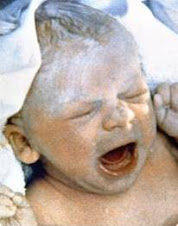
Sunday, February 22, 2009

As the technology of freezing eggs improves, more options open up for women


If you're not a woman of child-bearing age, you may never have heard of egg freezing.
But this form of in vitro fertilization has gained traction as its success rate has improved.

Pix left:A cryoloop, a critical tool in advancing pregnancy results from frozen eggs, is smaller than the point of a pen, right. Film is placed on the loop, which holds eggs for freezing

It was in 1978 when the first "test tube" baby was born in England. There, doctors fertilized an egg with sperm in a petri dish, then implanted the resulting embryo into the womb. Since then, hundreds of thousands of women have conceived using this method. In 2006, more than 54,000 IVF babies were born in the United States.


IVF using frozen eggs is newer. In the past decade, as many as 500 babies worldwide have been born from embroys that originated from a thawed-out egg. The first report of such a baby was in 1986. In 2007, the United States recorded its first baby born using both frozen egg and frozen sperm.
Egg freezing appeals to several groups of people, including young cancer patients facing life-saving but fertility-damaging treatments and women who want to extend the window of opportunity to have children because they don't yet have a life partner in the picture.


Couples undergoing fertility treatments also may be drawn to egg freezing. Perhaps they don't like the idea of having to destroy unused embryos or keeping them in limbo. Or -- erring on the side of caution -- they opt for the procedure to avoid the potential issue of custody: Unlike embryos created with a partner's sperm, frozen eggs, which belong to the woman, don't pose problems. (Who "owns" the embryos has landed more than a few soon-to-be-ex couples in court.)

Because oocyte cryopreservation (the medical term for egg freezing) is still considered experimental by the American Society of Reproductive Medicine, many U.S. fertility clinics only offer the service to cancer patients.
But that may soon change.


In 2006, an experimental program at Toledo Hospital's Fertility Center of Northwest Ohio welcomed the arrival of its first baby born from a once-frozen egg.
"It was our fertility doctor's idea [to join the study]," said Stacey LaPointe of suburban Toledo, who was 31 when her eggs were retrieved and frozen. "I think we were a little leery, a little hesitant at first."
But after doctors explained the process to LaPointe and her husband, Ryan, the couple decided to go forward.
"We had tried other things unsuccessfully," she said. "It was one of those crapshoots. The odds were so low, we thought, 'Well, it's worth a try.' "
Doctors froze seven of LaPointe's eggs. The five that survived the thawing process were fertilized. Two embryos were implanted, and the other three were frozen.
On Aug. 21, 2006, Claire LaPointe was born.
"We were thrilled," LaPointe said.
On April 1, 2008, she gave birth to her second child, Katie -- conceived the old-fashioned way.


Cleveland Clinic's Beachwood Fertility Center has frozen the eggs of a dozen cancer patients over the past two years. Roughly half of the Clinic's cancer patients do some type of "fertility sparing" procedure, such as embryo or sperm freezing.


As part of a trial to demonstrate that the procedure can work, the Clinic's Partnership For Families program recently picked up most of the expenses -- egg donation, freezing, thawing and fertilization -- for two healthy women in their early 40s who used frozen eggs from a woman in her early 20s. The two women have progressed beyond their first trimesters.


Prior to these two pregnancies, talking to cancer patients about freezing their eggs wasn't a comfortable conversation. No one knew if the success at other clinics could be replicated at the Clinic, said Dr. James Goldfarb, director of the in vitro program at the Clinic's fertility center.
Now, he said, "It's so much nicer to say, 'We can freeze your eggs and have a reasonable chance of this working.' "


The Clinic will consider on a case-by-case basis whether it will offer egg freezing as an elective procedure to healthy women.
University Hospitals Case Medical Center hopes to develop an egg-freezing program in the next six months, said Dr. William Hurd, director of the division of reproductive endocrinology at UH's MacDonald Women's Hospital. And like the Clinic's program, the hope is to expand it to healthy women.


Increasing chances of success
The closer you are to 40, the less likely you are to be a good candidate to freeze your eggs. The cutoff age at Extend Fertility Inc. in Massachusetts is 40, while the Florida Institute for Reproductive Medicine in Jacksonville won't accept women over age 38. CHA Fertility Clinic in Los Angeles has a cutoff of 35, with few exceptions.


Beyond age, women need to be as healthy as possible.
So what's the optimal age to freeze one's eggs? About the same that a woman should thinking about having kids.
"Before 30 is ideal," said Hurd. "In her 20s is a good time to have the first child."


At the Florida Institute for Reproductive Medicine, 53 babies have resulted from frozen eggs in the past nine years. One of those babies is now 3, the child of a cancer patient whose frozen eggs were thawed, fertilized and then carried by a surrogate.


At last count, the University of Bologna in Italy has reported a 25 percent success rate using frozen eggs -- roughly one baby for every four pregnancy attempts -- resulting in around 150 babies.


A clinical study operated by Extend Fertility Inc. -- which works with five partner centers in Boston; Austin, Texas; New York; Beverly Hills, Calif.; and Seattle -- has resulted in 13 babies born from women who used frozen donor eggs, said spokeswoman Marla Libraty.
"The data is early, but it is encouraging," she said.
CHA Fertility Clinic in Los Angeles -- which touts itself as the country's first commercial egg bank -- has had 27 babies born. Five women are currently pregnant.


At the Florida Institute, between 40 percent and 50 percent of women who have had about 10 eggs frozen and then thawed have taken home a baby, said program director Dr. Kevin Winslow.

"In theory, eggs may be stored indefinitely. It is the freezing and thawing process that damages the eggs, not the duration that they are frozen," said Scott Brown, spokesman for California Cryobank.
Dr. Glenn Schattman, a specialist in reproductive surgery at Cornell University's Weill Medical College in New York, says many clinics don't know what their success rates will be because they haven't thawed any of the eggs that they've frozen.


"Most programs don't have their own data," he said.
Most of the women who come through the doors of CHA Fertility Clinic in Los Angeles end up not going through with the procedure, said clinic director Dr. Vicken Sepilian.
"The big misconception is that it's a sure thing and it can be done at any age, that fertility doctors can undo the clock," he said.
Prospective patients should do their research and homework before committing to freezing their eggs, Sepilian said.
Some of the most important questions to ask a clinic: How adept are you at freezing and thawing? What is your pregnancy success rate? How many babies have been born through the specific technology at your clinic?
"It's not this magical treatment that's going to work 100 percent of the time," he said. "It's a backup plan."

SOURCE: CLEVELAND.COM

Wednesday, February 11, 2009

A cheap, painless alternative to IVF?

Breakthrough in fertility treatment as first British babies are born using new technique

A landmark in the development of fertility treatment was announced by doctors yesterday with the birth of the first babies to be conceived using a revolutionary technique that offers a safer, cheaper alternative to IVF.

The twin boy and girl, who were born on 18 October at the Radcliffe Infirmary in Oxford, were conceived using In Vitro Maturation (IVM), a method that dispenses with the use of costly fertility drugs, saving up to £1,500 on the normal price of treatment.

The technique is also safer for the one in three women among those seeking fertility treatment who have polycystic ovaries, a condition that puts them at high risk of dangerous side effects from fertility drugs.
Specialists said the development could make in vitro techniques available to more infertile couples by cutting the cost of treatment. Infertility is estimated to affect one in six couples in the UK but IVF costs around £5,000 a cycle and treatment is restricted on the NHS.

Tim Child, a consultant gynaecologist at the Oxford Fertility Clinic and senior fellow in reproductive medicine at Oxford University, who led the work, said: "I think it is a safer, cheaper alternative to IVF for all women. However, for many women the success rates are currently much lower. Research in the future will address this."

The Oxford Fertility Clinic is the only one in the UK licensed to use the technique: 20 cycles of treatment have been carried out and four other women are currently pregnant, giving a pregnancy rate of 25 per cent. This is expected to improve with further experience. In addition, without the need for drugs, repeating the procedure would be less taxing on the woman. For standard IVF, the Oxford clinic's pregnancy rate is 45 per cent.

The parents of the babies, who have asked to remain anonymous, were delighted, Mr Child said. At birth the boy, born first, weighed 6lb 11oz and the girl weighed 5lb 14oz. "The parents are ecstatic. They have got absolutely stunning twins. They went home on Tuesday to start their new life together. It is wonderful."

In standard IVF, the woman takes fertility drugs for five weeks to stimulate production of her eggs, which are then collected direct from her ovaries under the guidance of ultrasound, before being fertilised in the laboratory. The drugs cost between £600 and £1,500, with charges often higher in London.

The procedure is time consuming and uncomfortable and for the third of women with polycystic ovaries there is a one in 10 risk of severe ovarian hyperstimulation syndrome, a dangerous side-effect that in rare cases can prove fatal.

IVM avoids the use of drugs and instead involves collecting eggs from the ovaries while they are still immature. The eggs are then grown in the laboratory for 24 to 48 hours before being fertilised and replaced in the womb.

Mr Child said: "The main advantage is improved safety for women. Women with polycystic ovaries have a one in 10 chance of severe ovarian hyperstimulation syndrome. IVM completely takes away that risk. IVF is also expensive. With IVM the cost is reduced, meaning it could become a more accessible form of fertility treatment."

The technique was pioneered by the University of McGill in Montreal, Canada, where Mr Child spent two years researching and developing it before joining the University of Oxford in 2004. It has also been used in Seoul, South Korea, and Scandinavia. To date about 400 babies have been born worldwide using IVM compared with around two million by IVF.

At present the Oxford Fertility Clinic is only offering the treatment to women with polycystic ovaries, but in the long term Mr Child said he hoped to offer the procedure to all women. "When we see patients we say these are the options and it is up to them to decide. We are not offering it to women with normal ovaries at present because we don't get enough eggs from them. It depends on the number of resting follicles and with normal ovaries you don't get so many.

"On average we get four eggs from a woman with normal ovaries compared with 16 from one with polycystic ovaries. The procedure involves a process of attrition – two-thirds mature and two-thirds of those fertilise – so you need a decent number to start with."

Research on developing the culture medium in which the eggs are matured in the laboratory could reduce the attrition rate so that fewer eggs are needed. The technique could then become suitable for women with normal ovaries, Mr Child said.

A second drawback of the procedure was that eggs grown in culture had a harder outer shell than those matured in the ovary and were more difficult for sperm to penetrate. The eggs had to be fertilised by ICSI – injecting a single sperm directly into the egg. "We hope to develop the culture medium so the egg doesn't mind being grown in the laboratory and we can use ordinary insemination [mixing eggs and sperm so fertilisation occurs naturally]. But in most IVF clinics, 50 per cent of patients are treated with ICSI anyway," he said.

A spokesman for the Human Fertilisation and Embryology Authority said IVF was expensive for most couples and a minority got treatment on the NHS. But it was too soon to tell whether IVM would replace IVF.

"Anything that reduces the cost of IVF, provided it is safe, means treatment could be available to more people. But this is an emerging technology – it is very early days. The most important thing is that patients get proper information so that they can make a decision on what is best for themselves."

Source: independent.co.uk

Monday, January 26, 2009

New tool to test sperm and improve fertility success rates

London (IANS): A novel method, developed by scientists for testing the health of a sperm before it is used in IVF, boosts chances of conception.

University of Edinburgh researchers have created a way of tagging individual sperm quality, so that only healthy ones are used in fertilising an egg as part of IVF treatment.

IVF or in-vitro fertilisation is the basic assisted reproduction technique, in which the man's sperm and the woman's egg are combined in a lab and after fertilisation, the resulting embryo is then transferred to the woman's uterus.


The sperm are captured in two highly focussed beams of laser light. Trapped in 'optical tweezers', an individual sperm's DNA properties are identified by the pattern of the vibrations they emit in a process known as Raman spectroscopy.
This process is being used for the first time to evaluate DNA damage in sperm.

Existing methods to test sperm DNA quality cut off cells in half and tag them with fluorescent dye, which ends up rendering the sperm useless. This new process leaves them unharmed. So if it is found to have good DNA quality, it can still be used in IVF treatment.

Elfick, the project head, said: "In natural conception, the fittest and healthiest sperm are positively selected by the arduous journey they make to the egg.
What our technology does is to replace natural selection with a DNA based 'quality score'. But this is not about designer babies. We can only tell if the sperm is strong and healthy not if it will produce a baby with blue eyes," he said.

The research is currently in a pre-clinical phase, and if successful could be available to patients in the next five to 10 years, said a release of Engineering and Physical Sciences Research Council, which had funded the project.

SOURCE: hindu.com

Sunday, January 4, 2009

IVF twins joys for couple who spent £32,000

AFTER nine years spending £32,000 on fertility treatment, Jayne Day and Stephen Jenkinson never thought they'd have their own baby.
But a final chance at IVF with savings originally earmarked for a house extension, led them to not one little bundle of joy, but two.


On Saturday, the proud parents of 15-week-old twins Harry and Archie were among dozens of other couples celebrating successful treatment at Newcastle's private hospital St Jude's.

The couple went for treatment at the hospital's other base, in Wolverhampton, after six failed IVF attempts at another hospital.
When the clinic opened in Newcastle 15 months ago, they moved their treatment there.
TIN.adverts.addToArray('article-detail-impact-tile', 'AAMSZ=452x118');
Jayne, who has four children from a previous relationship, said it felt amazing to fall pregnant again.
The 35-year-old, from Stockfield Road, Meir, said: "I started treatment in January this year after trying for a baby for nine years.
"I'd got birth children, but Stephen hadn't so that didn't stop us wanting one together.
"I'd had a miscarriage and two ectopic pregnancies that meant I lost my fallopian tubes.
"I fell pregnant in February and couldn't believe it when I found out I was having twins."
Stephen, aged 42, said: "After everything we have been through, having twins is amazing."
Joining the couple, who are also foster parents, at the party was Jo Hope with her husband Rob, and their 22-month-old daughter.
Little Ellie was born after the couple spent three years trying for a baby and started treatment in April 2006.
Jo, aged 29, from Tarragon Drive, Meir Park, said: "We had given up hope before we came here.
"It was a stressful and upsetting time because everyone around us was having children and we weren't.
"When we came here all our prayers were answered.
"Now it is lovely to come back and see all the other couples and their babies."
Rob, also aged 29, added: "I don't cry very often, but I was over the moon when I found out the treatment had worked."

More than 120 babies have been delivered this year after successful treatment at the hospital in Sandy Lane.
Its medical director Jude Adghe said the party, also held as a Christmas celebration, aimed to help both new and former patients.
He said: "We thought a party would be a really good way to get all the patients together so that they can share their experiences.
"There are also patients who haven't been lucky enough to have kids yet who may want to ask questions and interact with couples who have been through the system."
Newcastle Mayor John Cooper was also invited to have a look around the hospital and greet guests.
He added: "It has been great to see the children and the hospital

SOURCE:THISISSTAFFORDSHIRE.CO.UK

Thursday, December 25, 2008

Breakthrough IVF test to double baby chance for childless couples

A fertility test that doubles the chances of pregnancy offers new hope to childless couples.
The test helps identify the healthiest embryos for use in IVF treatment and could cut the risk of twins or triplets.


A trial involving couples
British experts are hoping to get permission from the fertility regulator here to offer it to women within the next few months.
Unlike most existing checks for a small number of abnormalities in embryos, the new CGH ( comparative genomic hybridisation) test examines the full complement of normal chromosomes.

The test is also more accurate because it can safely remove a greater number of cells from embryos for DNA testing before the healthiest ones are chosen. Findings from a trial at the Colorado Centre for Reproductive Medicine, near Denver, used results from women with hard-totreat infertility, where previous IVF attempts failed or ended in miscarriage.
They showed the chances of an embryo implanting in the womb were 62 per cent - more than double the 27 per cent rate expected.
Out of 23 women aged between 30 and 42 taking part in the trial, 18 conceived and their pregnancies passed the 12-week stage.
The predicted live birth rate is 78 per cent, which compares with an anticipated 62 per cent in this group.


Two have given birth and four more are expected to deliver their babies by the end of the year, according to data presented yesterday at the American Society of Reproductive Medicine in San Francisco.

Dagan Wells, of the Reprogenetics UK Clinic and the University of Oxford, whose team analyses DNA extracted from embryos at the Colorado clinic, said the findings were 'dramatic'.
He is hoping to offer the technique to couples for around £2,000, in addition to the cost of IVF treatment.

He predicted its use would reduce the occasions when multiple embryos have to be implanted.
'The pregnancy rates we've got so far are absolutely phenomenal. We're ready to begin a trial in the UK,' he said.

SOURCE: dailymail.co.uk

Friday, December 12, 2008

Indian woman gives birth aged 70: report

An Indian woman has given birth to her first child at the age of 70 after receiving IVF treatment, newspapers reported her doctor as saying.
Rajo Devi, who married 50 years ago, gave birth to a baby girl on November 28 after in vitro fertilisation, said Anurag Bishnoi, a doctor at the Hisar fertility centre in Haryana state.


"Rajo Devi and [her husband] Bala Ram approached the centre for treatment and the embryo transfer was done on April 19," he told the Hindustan Times.
"Both the mother and child are in good health."


Dr Bishnoi claimed Ms Devi was the world's oldest mother.
Another 70-year-old Indian was reported to have given birth to twins via IVF in July this year, while a 66-year-old Spanish woman had twins in 2006.


Ms Devi's husband, aged 72, had also wed his wife's sister after 10 years of his first marriage did not result in children. His second wife also failed to become pregnant.

It was not clear whose egg and sperm were used in the successful treatment.
"IVF has revolutionised the way we look at infertility," said Dr Bishnoi.
"Infertility is no longer a social taboo or a divine curse. It can be treated scientifically."

Tuesday, November 11, 2008

'IVF without hormones' hailed

Younger women undergoing fertility treatment may stand a better chance of getting pregnant with a new procedure that does not stimulate the ovaries with powerful hormone-containing drugs, doctors said yesterday.

Findings from the first fertility centre in Britain to use in-vitro maturation (IVM) as an alternative to IVF reveal that pregnancy rates are comparable between the two techniques but only for women under 35. In IVF, women are given hormones for about two or three weeks to stimulate their ovaries to produce mature eggs before they are surgically removed for in vitro fertilisation. In IVM, however, immature eggs are removed from the ovaries without the use of drugs and matured in the laboratory before being fertilised with sperm.

The new technique, which has only recently been introduced to Britain, is considered to be safer than conventional IVF because it does not increase the risk of potentially lethal hyperstimulation syndrome, where the ovaries respond adversely to the hormones used during IVF treatment.

Tim Child, of the Oxford Fertility Centre, said that 70 women in Britain had undergone IVM in the past year and for the 40 patients who were under 35 the pregnancy rate was 48 per cent – compared to a pregnancy rate of about 55 per cent for women undergoing conventional IVF.

The percentage of under 35-year-olds achieving a clinical pregnancy – where the heartbeat of the baby has been detected – was 33 per cent. Just 10 babies of mothers undergoing IVM and attending the Oxford centre have so far been born, so it is still too early to estimate an accurate live-birth rate, which is 31 per cent for IVF.

"What we've found looking back on the first year of using IVM is that it works particularly well for a group of women at the younger end of the scale that we have treated," said Dr Child.

"It's an improvement in that we've worked out which patients do best with IVM, so it's about offering it to the right couples," he said.
About 900 babies have been born worldwide by the IVM technique. The first IVM babies in Britain were born last year after the Oxford Fertility Centre was given a licence to use the procedure by the Human Fertilisation and Embryology Authority (HFEA).

The HFEA's experts found that there was no evidence to suggest that IVM was dangerous either to women or to their babies – although further safety studies are still in progress.

Dr Child said that when IVM was first used, pregnancy rates and live-birth rates were relatively low compared to conventional IVF but better laboratory procedures, as well as patient selection, had improved the success rate significantly. "I'm not sure we will ever get better than IVF but the aim is to achieve the same success rate. The advantages of IVM are so great – it is safer and easier. Women who have had both say that they prefer IVM because they do not need several weeks of drug treatment," Dr Child said.

Svend Lindenberg, of the Copenhagen Fertility Centre, who pioneered IVM, said it was best suited to younger women who have regular periods.
SOURCE: independent.co.uk

Monday, November 3, 2008

Breakthrough Technology Takes Egg Freezing from Myth to Dependable Reality

The day of true reproductive freedom for women has arrived. A new scientific study confirms the efficacy of a revolutionary egg selection and freezing process that, at long last, offers women a viable and reliable fertility preservation option.

Developed and clinically tested by the scientists at ReproCure, a vanguard genetics products company, this process increases the live births derived from a cryopreserved egg almost seven-fold over the field's current standard. In simple terms, it means that for the first time, women in their prime childbearing years can freeze and bank their own eggs for future use, relatively confident that they will have a 26%-to-27% chance of a having a baby from each cryopreserved, genetically selected oocyte.

Significantly,these odds are better than those with conventional IVF at its best. The patent pending process called Egg Competency Testing (ECT), when coupled with ultra-rapid egg freezing technology known as vitrification (a protocol that minimizes egg damage), actually delivers on reproductive medicine's promise to liberate women from the tyranny of the biological clock. The stunning results of a rigorous multi-year ReproCure-funded study are published in the current issue of the prestigious journal Reproductive BioMedicine Online.

"Everything we've heard before about egg freezing needs to be put away," said Dr. Geoffrey Sher, Executive Medical Director of ReproCure and the Sher Institutes for Reproductive Medicine (SIRM(R)). Dr. Sher is a world-renowned trailblazer in the field of reproductive medicine for more than 25 years.

"I would heartily agree with medical governing agencies that in the past have strongly advised against the use of egg freezing and banking. Up until now, existing technology only offered a 1%-to-4% baby rate per frozen egg.... a false promise of success," noted Dr. Sher. "But ECT and vitrification, dual processes that allow us to select only chromosomally normal eggs for safe cryobanking are paradigm shifters.

They give women arealistic fertility preservation alternative they can count on." Normal Egg, Healthy Baby In essence, ECT, focuses on a relatively new DNA test called Comparative Genomic Hybridization (CGH) to determine which eggs are chromosomally normal (euploid). It's well established that, barring othercompromising medical factors or male infertility, it is euploid eggs that are most likely to yield chromosomally sound embryos, which in turn are the ones most likely to develop into healthy babies. Indeed, ReproCure/SIRM investigators were able to illustrate that inthe vast majority of cases, the transfer of one or two chromosomally normal(competent) embryos to a receptive uterine environment produced a babyalmost 70% of the time. The ECT process involves handpicking chromosomally normal eggs forpreservation.

Researchers now know that most eggs, even in young healthy women, are chromosomally abnormal (aneuploid). Further complicating things is the fact that the incidence of aneupolidy is random. One month a woman opting for egg freezing may be stimulated to produce 12 eggs and none will be normal. The next month, the same woman might produce six that are normal. The key to a successful outcome is freezing only the euploid eggs.

In contrast to the scattershot approach of freezing every egg harvested - a minimum of 20 at most centers, ReproCure's technique requires that only four or five normal eggs be frozen and banked. The CGH Factor CGH is a delicate and complex test that screens the full complement of chromosomes in each egg. ReproCure/SIRM's dedicated team has an expertise and experience in egg/embryo CGH that is unmatched by any other center inthe world, giving it an unbeatable track record in identifying chromosomally normal eggs. Only these are selected for vitrification(ultra-rapid freezing) and banking.

Once frozen, these eggs are stored until the time the woman chooses to create her family. Until now, family building has been severely constrained by simple biology. If a woman wanted her own biogenetic children, she was under the gun to procreate before her eggs were too old and chromosomally abnormal to generate offspring.

That ratchets up the pressure on everything from education to economics and romance. Women who haven't found the right mate by 35 or who can't afford to leave the workplace, find themselves penalized by nature. For most, a genetically related child is not possible. If they want to experience pregnancy, the only option is egg donation. ECT and vitrification does an end-run around the biological clock. It affords a woman the luxury of time, precisely because she's stored her own eggs while in her reproductive prime. Those oocytes, when properly warmed, fertilized and transferred are as likely to yield offspring in five, 10 or even 20 years as they are today.

ECT liberates a woman to achieve emotional, psychological and financial maturity, secure in the knowledge that she can have children of her own.

About Dr. Geoffrey Sher
Dr. Geoffrey Sher, Executive Medical Director and co-founder of SIRM, is an internationally renowned expert in the field of Assisted ReproductiveTechnology (ART) and has been influential in the births of more than 16,000 babies throughout his career.
Over the last 26 years, Dr. Sher has helped fashion the entire field of ART. After training under "The Father of IVF" Dr. Patrick Steptoe, Dr. Sher established the first private IVF program in the United States in 1982. He later established a number of centers throughout California before foundingthe first SIRM office - in Las Vegas.

For more than two decades, Dr. Geoffrey Sher and his medical team have been on the leading edge of IVF research. Each significant breakthrough has been incorporated into SIRM treatment protocols - lending the benefit of those many years' of IVF experience to every SIRM office. Dr. Sher has more than 200 scientific papers and abstracts to his credit. He has authored one of the most widely read books on IVF, http://www.haveababy.com/why/artbook.aspIn Vitro Fertilization: The A.R.T.of Making Babies

About the Sher Institutes for Reproductive Medicine (SIRM(R))
SIRM is one of the largest networks of infertility medical practices in the country. Founded in 1998 by Drs. Geoffrey Sher and Ghanima Maassarani, the Sher Institute family of practices has since grown to include 13 offices across the United States.

Dr. Sher founded the first private InVitro Fertilization (IVF) clinic in the U.S. in 1982. The SIRM philosophy is centered on individualized patient care, backed by ongoing scientific and technological breakthroughs.
SIRM has offices in Los Angeles, Chino Hills, Sacramento and Pleasanton, CA; New York City,Westchester and Long Island, New York; Bedminster and Phillipsburg, New Jersey; Dallas, Texas; St. Louis, Missouri; Peoria, Illinois; and LasVegas, Nevada.

More information can be found on the SIRM website at http://www.haveababy.com.

About ReproCure, LLC
ReproCure, LLC, headquartered in Las Vegas, Nevada, is a specialty genetics testing laboratory focused on benefiting: (1) women and couples who require assistance in becoming pregnant and (2) women seeking reproductive alternatives such as freezing their eggs for later use.

ReproCure is led by Medical Director Geoffrey Sher, MD and ScientificDirector Levent Keskintepe, PhD.

Source: prwire.com

Thursday, October 23, 2008

Indian Clinics Woo Fertility Tourists

Indian clinics woo "fertility" tourists as medical travel booms:

"We are actively recruiting egg donors!" reads the advertisement on the website of one of India's top in-vitro fertilisation clinics.
"Our patients are happy to pay generously for your generosity! They pay you up to rupees 40,000 (800 dollars) every time you donate".
A lack of regulation surrounding fertility services in India and the lucrative returns on offer to those that provide them has turned India into a popular hub of "IVF tourism".

Childless couples from overseas are attracted by the relatively low-cost treatment, as well as "friendly rules" when it comes to egg donors and surrogate motherhood.

According to the private Indian Society for Assisted Reproduction (ISAR), there are some 400 IVF clinics in the country, providing an estimated 30,000 assisted reproductive treatments a year.
There are no precise estimates for what percentage are taken up by foreigners, but doctors say overseas demand is fuelling a boom.
"Nearly half of our patients come from overseas. Of them, nearly half are of Indian origin," said Aniruddha Malpani, whose IVF clinic in Mumbai is considered among the country's best.

A full IVF cycle at the Malpani clinic costs 4,500 dollars, including medicines. In the United States, the average cost is 12,400 dollars, according to the American Society for Reproductive Medicine.
Malpani offers a top-end service, but the same treatment is available from other Indian clinics at less than half the price.
While cost is a big factor in drawing people from abroad, equally important is the lack of effective regulation.

"India has friendly rules. There are no restrictions on egg donation," said Manish Banker, vice president of the ISAR.
In Britain, the British Human Fertilisation and Embryology Authority (HFEA) has outlawed payments to surrogates and British IVF clinics allow doctors to implant only two embryos into the uterus in a treatment.
In India, five implants are allowed, substantially increasing the chances of pregnancy, and there is no shortage of egg donors.
"Attitudes towards egg donation are changing fast. Thirty years ago, Indians would balk at the idea of donating blood to a stranger, but now they don't," said Malpani.

A majority of Indian egg donors are housewives who are paid between 6,000 and 40,000 rupees (120-800 dollars), depending on their education level. Many of the women come from poor families.
Among the foreigners seeking fertility services in India, a good number are couples of Indian origin who come home to look for an Indian donor.
"Having a baby is an emotional issue," said Malpani, who runs the clinic with his wife Anjali.
"These people should be called reproductive exiles, not reproductive tourists. No one likes to travel for medical treatment," he said.
Critics, however, say the absence of regulation poses health dangers, as well as ethical issues about "rent-a-womb" exploitation.
"This business is like any other outsourcing industry. The only difference is the treatment offered here is very poor," said Puneet Bedi, a specialist in foetal medicine at New Delhi's Apollo hospital.
"Doctors here take short cuts, they implant more embryos than needed which multiplies risk to the mother."

A draft bill on assisted reproduction has been drawn up and is expected to be tabled in parliament soon, but women's health activists argue that it is aimed more at promoting a lucrative business than addressing health and ethical concerns.
"It was getting embarrassing for the government to keep saying there is no law in the country, so they had to come up with something," Bedi said.
On the back of a booming industry, medical companies have launched special deals that offer a range of health and travel services targeted at foreigners.
Right from arranging the medical visa -- which was introduced three years ago to boost medical outsourcing -- to providing recuperation holidays, companies like Mumbai-based Forerunners and Delhi's Life Smile take care of all requirements.
"Most people who come to us, especially for IVF, go in for a travel package too, since they have come all the way to India," said Kamal Parpyani, managing director of health tourism company Life Smile.
According to a 2004 study, India could earn as much as two billion dollars annually by 2012 through medical tourism, including from fertility services for overseas patients.
Doctors say Indians will benefit not just from the revenue, but also a reduction in the cost of expensive treatments as demand and competition grows.
"It's a market economy. The bad doctors will be weeded out and benefits will trickle down to people in smaller towns," Malpani said.
SOURCE: Agence France Presse

Monday, October 20, 2008

IVF doctor: Patients view him with awe but rivals are less impressed

IVF doctor: Patients view him with awe but rivals are less impressed

He is Britain's most successful IVF doctor with a live birth rate twice the national average and a fortune founded on enabling women to have children, sometimes after years of fruitless treatment in other clinics.
But Mohammed Taranissi is also one of the most controversial, constantly pushing against the rules for fertility treatment and provoking the wrath of the Human Fertilisation and Embryology Authority (HFEA). His rows with the regulator may have undermined his reputation but some, such as IVF pioneer Lord Winston, believe the publicity they have attracted has raised his profile.
Creating babies is as close as most doctors come to playing God and the Egypt-born specialist is viewed by his patients, many desperate, with something close to awe. He has regularly topped the league table of IVF clinics with a live birth rate of 60.7 per cent for women under 35 in 2007, 17 per cent ahead of his nearest rival.
What is his secret? Dr Taranissi says it is about being on duty 24 hours a day so each stage of the IVF process can be carried out at the right time. Rivals claim his results are achieved by cherry-picking the healthiest patients, a charge he rejects.
A more substantive criticism is that he transfers multiple embryos to improve the chances of at least one implanting in the womb. His two London clinics had the third and fourth-highest multiple birth rates at 33 and 32 per cent.
A twin or triplet birth increases risks for mother and babies as well as imposing a burden on the parents and the HFEA has set targets to reduce it. But Dr Taranissi argues this decision should be left to clinicians and their patients.
IVF treatment attracts some of the biggest personalities in medicine and brings huge rewards – Dr Taranissi's fortune was once estimated at £38m.
The HFEA has stumbled badly in its dealings with Dr Taranissi. Two years ago, it ordered a police raid on one of his clinics which he was suspected of operating without a licence – while at the same time contributing to a BBC Panorama investigation of the doctor screened on the day as the raids.
The incident drew charges of "trial by television" and led Dr Taranissi to launch a libel action against the BBC and a court action against the HFEA. The latter was settled last week with the withdrawal of all charges against him. His latest clash with the authorities before the GMC is being keenly watched.


SOURCE: independent.co.uk

Monday, October 13, 2008

Doctor in IVF furore is the best

Doctor in IVF furore is the best, says watchdog
• Taranissi success at 61%, double national average • Technique results in 12,596 births in UK overall


Britain's most controversial fertility doctor has once again been ranked as its most successful by the government's IVF watchdog, the Human Fertilisation and Embryology Authority (HFEA).
Mohammed Taranissi's Assisted Reproduction and Gynaecology Centre in London recorded the highest success rates among more than 100 clinics offering IVF in Britain, according to figures released by the regulator. Nearly two-thirds of Taranissi's patients who were under 35 had a live birth in 2006.
His success rate of 61% is almost double the national average of 31% for patients of the same age. Another clinic run by Taranissi, the Reproductive Genetics Institute, which has since closed, ranked second with a live birth rate of 50% for every cycle of treatment.
Overall, the figures show that there were 12,596 live IVF births in 2006, up 11.9% on the previous year, meaning that 16 babies out of every 1,000 born are IVF infants. They also show a substantial rise in couples seeking IVF across the country.
Nearly 35,000 women were treated in UK clinics in 2006, an increase of 6.8% on the year before. Success rates also rose across age groups, and markedly in women over 44, where live births rose from 0.8% to 4% for women using their own eggs. The use of donor sperm fell sharply, however, with 28% fewer treatments than in 2005. The fall, which the HFEA described as a "great concern", coincides with a change in the law that year which removed sperm donors' right to anonymity.
Lisa Jardine, chair of the HFEA, said: "In the year that we celebrated the 30th anniversary of the birth of the world's first IVF baby, these latest figures show just how far we've come. IVF is now commonplace, with the number of treatment cycles and births rising yet again." Last year, the average age of women having fertility treatment in Britain rose for the 10th consecutive year to 35.2 years old.
The HFEA has been in dispute with Taranissi for years. Last year his offices were raided by the HFEA on the evening of a BBC documentary about his clinics.
Taranissi is suing the broadcaster for libel. The BBC was yesterday ordered to pay an estimated £500,000 in legal costs to Taranissi. The BBC initially defended the documentary, IVF Undercover, which relied on undercover filming at Taranissi's clinic, saying it represented responsible journalism conveying matters in the public interest. However, it withdrew this defence last month. The BBC is continuing to defend its programme, citing the "hazards" of protecting confidential sources. It will seek to prove before the high court in January that the allegations are true.
Taranissi appeared before the General Medical Council this week to answer unrelated allegations from two patients who were treated at his clinic.
"We maintain a good service by being available seven days a week, because you have to be available to do things at the best time. We've also introduced a few new things which are not widely practised across the board, and some of them are still very controversial," said Taranissi.
London clinics completed the top five of the league table. The Lister Fertility Clinic and University College Hospital reported 44% live births in the under-35s, and Chelsea and Westminster Hospital 42%.
The HFEA figures also reveal which clinics created the most twins. Taranissi's clinic ranked second for multiple births, with 32% being twins.


Source: guardian.co.uk

Saturday, September 6, 2008

More Couples Turning to IVF

Approximately one in every 80 babies born in the UK is a result of IVF treatment, research has revealed. With one in seven couples experiencing difficulty conceiving, IVF has become an important part of family life for thousands of people across the country.

Figures show that IVF treatment has a success rate of 29% in women below the age of 35, and that number drops as a woman's age increases. According to some women who experienced IVF, natal hypnotherapy helped relax them, making the process more positive and less unpleasant. One new mum said: "The CDs really helped me to focus on my treatment, to remain calm and positive, and to be confident. Once I did get pregnant, I was in complete shock for about four months!"

Another added: "The CDs were a huge help in relaxing me and making me feel more in control during the process. I became pregnant at the third attempt and have now given birth to a lovely little girl."A survey found that out of 68 women who used the therapy, 46% became pregnant - 17% higher than the national success rate.

Source: Bounty.com

Sunday, August 17, 2008

'FIRST IVF BABY TURNS 30'

Happy 30th, Louise.

As I approach my 30th birthday, having delayed marriage and children, the social and biological clock of keeping time for childbearing ticks louder. However, thanks to another 30-year-old woman, it's possible for me to feel at ease. That woman is Louise Brown, the first child born via IVF. Last week marked not only her 30th birthday but thirty years of success in giving many women and men a second chance to have a biologically-related (at least, in part) child of their own. In fact, over 3 million babies worldwide have been born using IVF -- with over 52,000 infants born in the US, accounting for 1 percent of all births in the country.

In conversations with my close friends, it's been comforting to hear that we share the same concerns about starting a family later in life. We joke that after years of being on birth control--from condoms to pills to patches and rings and back to condoms again--diligently trying to avoid an unplanned pregnancy, we're fearful that we may, in fact, experience infertility.

Because of assisted reproduction and the tremendous successes gained in the past three decades, the clock is not ticking as loudly for me as it was for my mother. Instead, my generation has grown accustomed to this $3 billion industry--most of us know at least one friend, family member or colleague who has been through IVF. But this familiarity brings with it a whole new set of concerns. What are the ethical, moral, legal and financial impacts of this field? How do we grapple with these issues as a women's community, before others tell us what's best for our bodies and for our children? We've seen it before, and it will happen again.

It is incumbent upon the women's reproductive health community, particularly those who face these issues daily, to foster this debate. We might begin with the following concerns:

Number 1: Why is my generation of women and men more infertile than our parents? Currently, in the US, 1.2 million (or 2%) of women of reproductive age (defined by the CDC as age 10 to 49) have an infertility-related medical appointment each year; 10% receive infertility services at some point in their lives. As I've alluded, a big factor is age. To simplify things greatly, as more women gained equality in education and in the workplace, we also began to delay childbearing--for many reasons, including lack of maternity leave and inflexible work schedules.
But to highlight only age would be misleading. With so many individuals experiencing infertility (and in cases in which the underlying causes are never found), we cannot ignore the tremendous role that
environmental contaminants are playing in this problem.
Exposure to ubiquitous dioxins, such as cigarette smoke, lead, mercury and some agricultural pesticides are direct threats to a couple's ability to conceive or have a healthy pregnancy. And, more troubling, new research suggests that a broader range of chemicals--including many that are associated with everyday products such as household cleansers, flame retardants, personal care and beauty aids, and even plastic water bottles--could have a complex and far-reaching impact on fertility.

Number 2: Are these procedures--the hormones, the retrieval of eggs, the implantation of one or multiple embryos--safe for women and their children? The answer, for the most part, is that we don't know. While IVF has generally been accepted as safe by the American public, there are in fact very little published data, let alone quality, standardized data, on the short and long term safety of these procedures on women and children's health. As we see an increase in women going through these procedures for either their own reproduction or to donate their eggs, how can we fully inform them of the potential risks and benefits?

Number 3: The growth of this industry and the growth in the numbers of assisted fertility clinics (now at 475 in total) have increased the demand for women's eggs. While most clinics offer women an average of $3,000 to $8,000, some "baby brokers" have offered as much as $50,000-80,000 for specific egg donors. (The
American Society for Reproductive Medicine's (ASRM) guidelines allow for women to be compensated for their time and risk up to $5,000 or $10,000 in some cases, but this is neither mandated nor regulated by either state or federal law.) This issue poses its own ethical and moral dilemmas: should a woman be compensated for donating her eggs? Can payment create a coercive or exploitative situation? What are the race and class implications of who demands and who gets solicited for their eggs?

As with many momentous events in my life, as I approach my 30th birthday, I'm asking myself more questions than I know answers. I have found that asking questions--and listening to a broad range of voices who have their own personal and insightful answers--is the first step in the process in advocating for change. We must grapple with these issues and then propose solutions that follow our values and morals. So, in that vein, my parting question: what policies will empower all women to make their own decisions about having a child and yet protect her health? The answer to this will be the best 30th birthday present for me and Louise.

Jennifer Rogers


Wednesday, August 13, 2008

PARENTS TELL IVF TECHNIQUE SUCCESS


Evie Bloomer is the first IVF baby to be born in the UK using a pioneering technique to freeze embryos.


And Evie's parents, Ian and Rebecca, said they wanted their story to inspire other childless couples trying for a baby not to give up hope.

The childhood sweethearts, from Cwmbran, South Wales, had been trying for a baby since they married in 2001. But tests revealed that Mrs Bloomer, 28, had endometriosis, a condition which was making it difficult for her to conceive.

Desperate for a baby, the couple attended the IVF clinic at the University Hospital of Wales, Cardiff. After one failed attempt the hospital offered the Bloomers a new way of freezing their unused embryos - embryo vitrification - that gave them a better chance of survival when they were ready to try again. Mrs Bloomer fell pregnant almost immediately using one of these embryos and became the proud mother of a healthy baby girl on July 23.

She said: "I hope that if anybody going through treatment sees us and sees Evie it gives them one last little bit of hope to go for it."
Lyndon Miles, head of embryology and andrology for IVF Wales, explained how it works: "Vitrification involves rapidly cooling and storing cells at very low temperatures for future use.

"An IVF cycle produces a number of embryos. Those that aren't immediately transferred back to the patient and that are of good enough quality are cooled slowly to the temperature of liquid nitrogen (-196C) and stored until needed.

"Conventional slow freezing creates ice crystals which can damage the embryo as it is thawed. Vitrification differs from traditional cooling and storing techniques in that it allows instantaneous 'glass-like' solidification of eggs and embryos without the formation of ice crystals. Since no ice crystals form, a much greater percentage of embryos survive thawing following vitrification. With conventional freezing methods, post-thaw survival rates vary from 50% to 80% whereas we have achieved 98% with vitrification."

Mr Miles said 17 out of the 39 women offered the treatment so far had fallen pregnant. Four of those are expecting twins.
He said the process would also be helpful to women diagnosed with cancer who want to freeze a number of eggs in case chemotherapy leaves them infertile. It may also be used to allow women to delay motherhood by "banking" eggs while they are at their fertile peak and using them later after fertility has declined.

SOURCE: The Press Association

Tuesday, July 29, 2008

INTERESTING AND INFORMATIVE BLOG ON INFERTILITY

CHECK OUT THIS INTERESTING BLOG BY LOLLIPOP GOLDSTEIN; ABOUT INFERTILITY AND PREGNANCY LOSS, AN EXPLORATION OF ADOPTION AND DONOR GAMETES, A BITCH SESSION ABOUT DAILY LIFE AND BOOKS...ETC. AT:
http://www.stirrup-queens.blogspot.com

Sunday, July 27, 2008

The birth that started a revolution


Thirty years ago Louise Brown, the first test tube baby, was born, and the world of fertility changed forever.

Her mother, Lesley, 33, had blocked fallopian tubes, so Dr Patrick Steptoe and Bob Webster took an egg from one of her ovaries, under anaesthetic, and fertilised it with sperm from her husband, John, in a laboratory, before placing it in her uterus. Nine months later, on July 25, 1978, Louise was delivered by Caesarean section at Oldham and District General Hospital.


Since that day, a series of in-vitro fertilisation (IVF) breakthroughs has enabled tens of thousands of couples to have the children they longed for. Other leaps have included treatments for male infertility, the use of donor eggs, surrogates and the genetic screening of embryos.

In Britain alone, 111,633 children have been born through fertility treatment; worldwide, the figure is estimated to be 3.5 million. The latest figures from the Human Fertilisation and Embryology Authority (HFEA), the regulatory body set up in 1991, show that 32,626 couples in Britain had IVF in 2005, leading to a total — including twins and triplets — of 11,262 children. About 25 per cent of IVF treatments are funded by the NHS; the rest are paid for privately, costing up to £8,000 (Dh58,525) a cycle.


Exceptions: But while IVF has answered the prayers of many couples, it is not a cure-all. The average success rate nationally for women under 35 is 29.6 per cent, while those aged between 40-42 have just a 10 per cent chance of conceiving using their own eggs. (There are exceptions: at the Assisted Reproduction and Gynaecology Centre in London, for example, the take-home baby rate is 59.9 per cent for women under 35). And fertility treatments are also transforming the family, raising ethical questions about concepts such as “saviour siblings”, babies genetically matched and created to provide tissue — often umbilical cord stem cells — to treat disease in an older child.

Similarly, treatment for post-menopausal women, same-sex couples and the spectres of sex selection for social reasons (illegal in the UK) and “designer babies”, where embryos are chosen or discarded for reasons other than health and viability, have also led to disquiet. Meanwhile, Louise, has a child of her own. Cameron, aged 18 months, was conceived naturally — an everyday miracle perhaps, but no less a miracle for that.

The first IVF triplets were born in 1984. In recent years, the HFEA has raised concern over the relatively high incidence of multiple births conceived through IVF; the risk of death before birth or within the first week after birth is more than four times greater for twins, and almost seven times greater for triplets, than for single births. Currently, around one in four IVF pregnancies results in twins or triplets, and the HFEA is now calling for more single embryo transfers to reduce this figure to 10 per cent —although clinicians are reluctant to do so, as replacing just one embryo reduces the chance of pregnancy. Mindy Vernon, 44, and her banker husband James, 43, live in Sevenoaks, Kent. They have triplets William, Thomas and Katherine, aged seven. “James and I got married when I was 32 and we tried for a year and a half to have a baby, without any success. Medical tests revealed no major issues and when the doctors diagnosed unexplained infertility, we decided to go for IVF. We had three rounds of treatment at Shirley Oaks hospital, at a cost of £2,000 a cycle, which failed. By the fourth cycle we were really losing heart, so we had three embryos replaced instead of the two we'd done previously. “Around the time of the IVF transfer I had terrible backache, so I had acupuncture treatments for the pain. When I mentioned that I was having fertility treatment, the practitioner said she could treat that, too, by inserting the needles at other sites on my body. Multiple pregnancy risk “I know there's conflicting opinion about whether acupuncture increases the success of IVF.

It may just have been coincidence, of course, but in my case it really did seem to work. “When we were told we were expecting triplets, we were overjoyed that I was pregnant at all and we didn't immediately take in the significance of what it meant to be carrying three babies at once.

Only later did we learn how much riskier it was for both me and the babies; we were informed that they might not all survive and were given a choice of terminating one of them. But after talking through the pros and cons, we knew we wanted to keep all three. “I have always felt it is important to keep fit, but I was told not to exercise and to eat as much as I could, so I stuffed myself and put on five stone.

I wasn't anxious during the pregnancy, because I had faith in my body and faith in the medical staff who were looking after me. I had a really easy pregnancy, too; I wasn't badly affected by morning sickness. “I gave up work at 22 weeks, and at 26 weeks my consultant advised me to go to hospital and stay there, so I could have complete rest and be monitored twice daily in case any problems arose. I knew I was having two boys and a girl, which the hospital had named A, B and C, and I spent my time listening to classical music and visualising them as individual little people.

“My mother was cooking for me at home every day and bringing food into the hospital, so I sat around getting fatter and feeling very special and quite serene. The babies were finally born by C-section at 34 weeks — a team of 21 doctors and nurses was involved in the delivery.

None of them had any medical problems at birth, or subsequently. “They were allowed home after three weeks, by which time they had put on weight — and then the work really started: I breast-fed them as best I could for two months, but I didn't have much milk so they also got through 24 bottles a day. “James and I were lucky to have lots of support from my mother, in particular, who stayed with us for a whole year, and in the first few months James's mum crossed half the country every weekend to help out. “My mother and I did the weekday shifts and James and his mother took over at weekends so we could rest. Those early days, months and years were utterly exhausting and looking back, I can't believe we managed, but somehow we did. Having triplets is a joy, but it's also emotionally and financially draining.

Not convinced “I feel ambivalent about the guidelines that only two or even just one embryo should be replaced. There's no doubt that replacing three embryos maximises a woman's chances of getting pregnant, but it's not without its medical risks and bringing up three babies is not for the fainthearted. Still, we were fantastically lucky with our three; we love them dearly and wouldn't swap them for the world.”

The first commercial surrogacy took place in Britain in 1985 when Kim Cotton, a mother of two, was paid £6,500 to carry a child conceived using her egg and the infertile woman's husband's sperm. It is now illegal for a surrogate to charge fees, but reasonable expenses may be paid to cover clothing, travel, food, time off work, etc, amounting to anything from £7,000 to £15,000.

Two types of surrogacy: There are two types of surrogacy. Straight surrogacy uses the egg of the surrogate and the sperm of the intended father and is usually carried out via artificial insemination at home. Host (or gestational) surrogacy requires IVF, as embryos are created using eggs and sperm from the intended mother and father and transferred into the surrogate mother. Fiona O'Driscoll, 38, who works for the charity Save the Children, is married to Andrew, 39, a business consultant. A surrogate mother is carrying their baby, due in October. “I have a condition called Mayer Rokitansky Kuster Hauser Syndrome (MRKH), which means I was born without a womb — although I do have ovaries — so I knew that if I wanted a family I would need to use a surrogate mother or adopt. We looked at adoption, but it's almost impossible to get a baby, and we really wanted to create one that is genetically ours. “We got in touch with the non-profit organisation Surrogacy UK in order to make contact with a surrogate and find out more about the process. The ethos is one of friendship before surrogacy and, at the social events, we got to know another couple, Kate and Dennis, really well over a period of months. They already have two children and offered to help us. “To be honest, my first instinct was: ‘Why on earth would someone offer to carry another woman's baby?' It was hard to believe anyone would do something so momentous purely out of the goodness of their own heart. But Kate is such a selfless person and she's certainly not in it for the money; all we do is make sure she's not out of pocket by covering expenses like multivitamins and maternity wear, taxis and childcare. “We were treated at the London Fertility Clinic in Harley Street; I took drugs to stimulate my egg production. These were fertilised by Andrew's sperm, and the resulting seven embryos were frozen. Two survived the thawing process and were transferred into Kate, who had taken drugs to prepare her body. Two nail-biting weeks later, Kate, Andrew and I were all together in a coffee shop in central London when the call came through that she was pregnant and we all burst into tears. “Kate is now 28 weeks pregnant. Andrew and I — and Dennis — will all be at the birth; it's very exciting. We're so proud of what they are doing. You read horror stories about surrogacy costing a fortune or the surrogate trying to keep the baby, but the truth is, it's about a good friend giving you the most extraordinary gift imaginable.”
Names have been changed
SOURCE: Daily Telegraph

Friday, July 25, 2008

HOW DO COUPLES COPE WHEN IVF FAILS?

Broke, babyless and in need of help. John Naish examines the taboo question of how couples cope when it all goes wrong:

Across Britain next Friday, thousands of couples will brace themselves for a welter of “miracle-baby” stories as the world marks the 30th birthday of Louise Brown, the first test-tube child. In the shadow of assisted conception's many successes are the 75 per cent of women patients for whom the gruelling medical process never works. The vast majority are neither monitored nor offered counselling but, it seems, are expected to slink away, marked “failed.”

Caroline Gallup is among the 25,000 women each year whose fertility treatment proves fruitless, often after spending all their available funds and putting their relationships under perilous strain. Rather than quietly grieving, Gallup is campaigning for the NHS and high-earning private clinics to give support after assisted conception has failed and to fund studies into what happens to these people's lives.

Very little research has been done, but in 2000 a small study of 76 women by the Royal Maternity Hospital in Belfast found that five years after their unsuccessful treatment they suffered “significant psychological dysfunction”, particularly stress and depression. The research, published in the journal Human Fertility, concluded: “There is a strong need to prepare women better for treatment failure and to ensure that counselling is available when further treatment is no longer appropriate.” This echoes the findings of a Hull University study three years earlier. Both recommendations have fallen on deaf ears.

The government watchdog, the Human Fertilisation and Embryology Authority, says that it sees issues about follow-up monitoring and counselling as outside its remit, because it regulates only the process of infertility treatment itself.

Hence Gallup's campaigning. “I see the routine provision of post-treatment counselling as a moral duty,” says the 44-year-old Londoner. “When you are treated, you have to believe that a baby will grow. When it doesn't, the crash is awful, but you're buoyed as long as you can go through another cycle. I think it's only morally right for clinics to carry on with ‘after-sales service' when that hope has disappeared.”

COUPLES HAVE THE UTMOST OPTIMISM
“The clinics do tell you at their open days that there is a 76 per cent failure rate across the board, but couples aren't in a position to take that in,” says Gallup. “The only way you can enter into something so grim is with the utmost optimism.” Indeed, a study in The Obstetrician & Gynaecologist journal found that although clear information on success rates is given to couples, “the majority believe that they will be the minority who achieve pregnancy”.

Gallup and her husband decided to stop trying after they had paid £8,000 for private treatment. “It was partly down to money - we'd run out - and partly the fact that it was wrecking our relationship. My husband said he didn't want to go through it any more. It was turning me into a total obsessive,” she says, adding: “Blame can play a really big part in relationships after treatment failure. It's one of the big reasons why counselling is needed.”

Four years after the treatment ended, she says: “My husband and I are still dealing with it. I have had to reinvent myself. I didn't know what my identity was after we had finished. That's a huge psychological thing.” Now she has taken a less demanding job in her career in events management to spend time lobbying interest groups and politicians. She is also trying to develop a career as a writer, having published a book on her fertility treatment experiences, 'Making Babies the Hard Way.'

Emerging from fertility treatment babyless, broke and in need of professional support to get back on the rails is a common experience, according to the British Infertility Counselling Association. “A lot of people come out of the process highly stressed and they think they can go for free counselling, but there is no such thing,” says a spokeswoman. “Funding is a big problem for most people. They may well not be able to pay for private counselling because they have spent all their money on treatment.”

One of the few organisations to provide social support is More To Life, which helps involuntarily childless people to develop networks and swap advice. Membership costs £20 annually and has grown rapidly in the two years since it was established, says Susan Seenan, one of the organisers. “Social life can be difficult for infertile couples, especially women,” she says. “Wherever you go - barbecues, parties, christenings - everyone has children.
“It's difficult to talk about infertility and childlessness. It's seen as a stigma. But with more people leaving it until later in life to try for children, there is bound to be more infertility, more treatment, and more disappointed couples.”

It is not only infertile women who face bereavement and loss of purpose. David Downage regularly attends More To Life social events. He and his wife went through treatment in the NHS and privately, but ultimately decided that their hopes were beyond slim. “It was a traumatic decision, but the danger is that you go on trying too long and damage your relationship,” he says. “So we decided to move on.”

The Downages joined More To Life to extend their social network beyond old friends with their new families. “We had to find it by searching the web,” he says. “It's strange that clinics can't point you to organisations like this after the treatment has failed,” says David, 47, a property developer. “For a man, discovering that you're going to be childless raises questions about what you are doing with your life. Once you can pay the bills, what is there after that? My wife and I came to view it as an opportunity to do other things. She is keen to get involved in charity work with children. We plan to retire early and, hopefully, be able to put some of our money into building children's schools. Certainly we will be able to do that as a legacy.”

Finding renewed purpose is one of the best survival strategies, says Jacky Boivin, a researcher at Cardiff University's School of Psychology. She has followed more than 100 women undertaking IVF over seven years, and is running a five-year study of 818 couples in Denmark.

“There is not much research into what happens to people in the long term after unsuccessful treatment, but our data indicates that about 40 per cent of couples are highly distressed at having to stop. After they have made the decision, around 5 to 10 per cent remain stuck in that state. People who come to the end of the IVF treatment and feel they could have had more are often seized with resentment.

“You have to reinvent a life that is not about having a family,” she stresses. “You have to look for the positive while acknowledging the negative. People have to regain a sense of control over their lives, after having it taken over by regimens that tell them exactly when they should be having sex. And they need to look at the experience as an opportunity to renew life interests. Sadly, the lack of post-treatment counselling means people don't have support in this.”
AND NOW THE GOOD NEWS
There is one surprise. Boivin says: “Oddly, the divorce rate is much lower among couples whose fertility treatment failed than for the general population: 10 per cent versus 50 per cent. We don't know why. There is life after infertility treatment. Not always an easy one, but most people will go on to find contentment, though the experience will always carry a sting.”
SOURCE: THE TIMES ONLINE

Wednesday, July 9, 2008

Science thinks big for better IVF


A new IVF technique involves selecting sperm with a shape and size that indicate good genetic quality. The best are injected into eggs to fertilise them. Results show improved pregnancy rates
Infertile men can more than double their chances of fatherhood with a new IVF technique, according to the most comprehensive study of the procedure yet conducted.


The results of a major trial of the approach, which builds upon the technique of injecting sperm directly into an egg, suggest dramatic benefits for the one in 12 couples affected by male factor infertility. A far more powerful microscope is used to identify the sperm most likely to succeed.

The results, from a team in Italy, are encouraging for men with an especially poor fertility prognosis and who have tried and failed to have children by IVF at least twice in the past. Their prospect of becoming fathers using the therapy was double that with standard methods, the study found.


The method, which was first developed in 2004 by a team led by Benjamin Bartoov, of BarIlan University in Israel, is called intra-cytoplasmic morphologically-selected sperm injection (IMSI). It involves examining sperm under a high-magnification microscope, about five times more powerful than standard laboratory equipment, to select those with a shape and size that indicates good genetic quality. The best-looking sperm are then injected into eggs.

British scientists hailed the results as the strongest demonstration yet of the new therapy’s benefits. “I don’t think a lot of people in the UK have woken up to this yet, but they are going to have to,” said Allan Pacey, Lecturer in Andrology at the University of Sheffield. “This is strong evidence from a well-designed study. If it can be repeated in two or three studies, people would seriously have to think about changing their approach.”


The treatment builds on the success of intra-cytoplasmic sperm injection (ICSI), a therapy for male infertility that has enabled thousands to become fathers since it was developed in the early Nineties. ICSI involves fertilising an egg in a laboratory by injecting it with a single sperm. As the sperm does not have to swim up to the egg and penetrate it, the method can help men whose sperm would otherwise be too weak. Even when men produce no sperm, doctors can sometimes recover them surgically from the testes.

ICSI is now used in about 40 per cent of the 41,000 IVF cycles performed annually in the UK, and accounts for about 4,500 children born each year. This suggests that upwards of 10,000 men a year could be appropriate patients for the new technique.

The Italian team, led by Monica Antinori, of the Raprui clinic in Rome, has conducted the largest randomised controlled trial to compare outcomes for IMSI and ICSI. It involved 446 couples in which the man was infertile and the woman was not known to have any problems.

The results, which are published in the journal Reproductive Biomedicine Online, show that the IMSI method can deliver considerable improvements in pregnancy rate. The overall pregnancy rate for the IMSI group was 39.2 per cent, compared with 26.5 per cent for the ICSI patients.

Among men with the worst prognosis, who had had at least two failed attempts at ICSI before, the improvement was better still. The pregnancy rate for IMSI was 29.8 per cent, compared with 12.9 per cent for standard ICSI. The miscarriage rate also fell considerably.

Dr Antinori said the findings demonstrate that the technique has potential, particularly for men with a history of IVF failure. “By treating this kind of patient with this technique, we offer them an opportunity to solve their fertility problems. As you can see from the results, the group that has had two or more IVF failures can get more than twice the opportunity to have a pregnancy with this new technique.”


She cautioned, however, that IMSI is about twice as expensive as ICSI, which typically costs between £3,000 and £5,000 per cycle in Britain. It also requires special training for embryologists, and the purchase of expensive high-magnification microscopes.

IMSI is not yet offered in the UK, though it is performed by clinics in Italy, Israel, Switzerland and Spain.
Dr Pacey said: “People have been seduced into thinking that, as long as you’ve got a sperm that’s half decent, it’s got as good a chance as any. But it looks like we can do better than that.”

Source: The Times July 7 2008

Tuesday, July 8, 2008

COFFEE CUTS CHANCE OF HAVING BABY


Drinking too much coffee or tea can cut the chances of a woman getting pregnant by a quarter if she already has fertility problems. The effect is the same as drinking excessive alcohol, according to researchers in the Netherlands. They looked at 8,669 women who had undergone IVF treatment and found the likelihood of pregnancy was significantly reduced for those who smoked, drank too much coffee and alcohol, and were overweight. Fertility expert Prof Bill Ledger, of the University of Sheffield, said: ‘A lot of women can have 20 cups of coffee a day and get pregnant while falling off a log, but if you’re already sub fertile it could push you over the edge.’

Source: Metro newspaper Tue, July 8, 2008

Thursday, June 12, 2008

New Treatment may increase IVF Success Rate

To increase the chances of conception to a 100 percent, among couples undergoing fertility treatment, University of Adelaide researchers have come up with a new formula.

To increase the chances of conception to a 100 percent, among couples undergoing fertility treatment, University of Adelaide researchers have come up with a new formula.

They claim that their technique can improve embryo implantation rates significantly, and reduce pregnancy complications in assisted reproductive technology (ART). The researchers say that they have applied it in a study on mice, which provided proof-of-concept that the treatment doubles pregnancy rates. Associate Professor Claire Roberts, who led the study, has revealed that he has received 294,750 dollars in from the Federal Government for showing that the treatment is safe, and that it improves pregnancy outcome and postnatal health in offspring.

"Assuming our success, the concept will be taken to the next stage in human trials with the help of the University's commercial partner for this technology, MediCult," Roberts says. The researcher says considers the funding to be a major breakthrough for those couples who are either infertile or suffer from recurrent miscarriages. "Assisted reproductive technologies provide some hope for these couples, but they have a relatively poor success rate with only 15-40 per cent of embryo transfers resulting in ongoing pregnancies, depending on maternal age," Roberts says. "Fertility in women declines significantly with age, and so too does the success of ART. Since women are delaying childbearing, ART is increasingly required to make couples' desire to have children a reality.

Currently, two-three per cent of the 250,000 annual births in Australia are a result of ART and this number is expected to rise," Roberts adds.
Powered By
widgetmate.com
Sponsored By
Digital Camera